
Published on
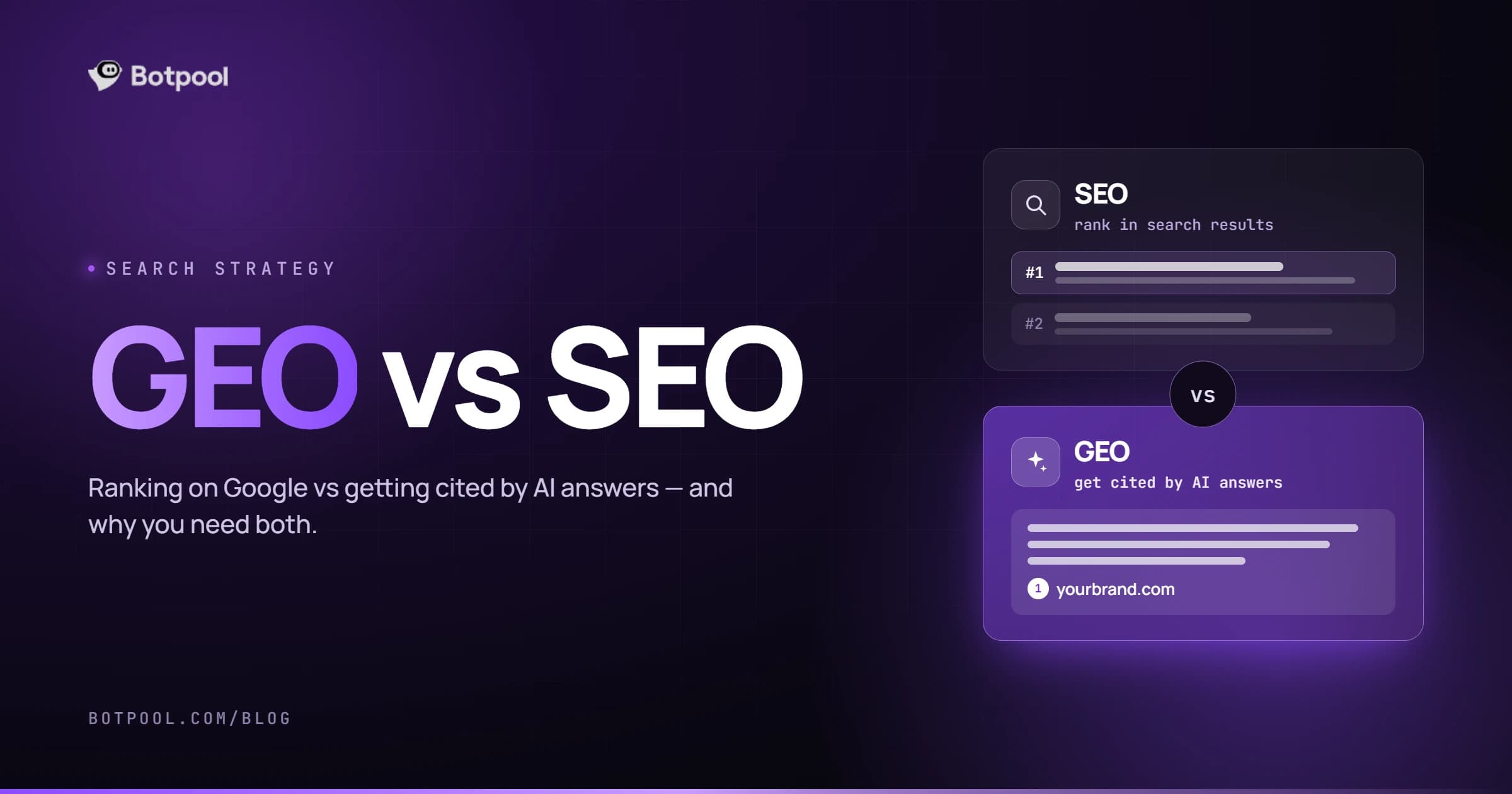
GEO vs SEO comes down to one question: where do you want to show up? SEO helps your pages rank in Google's list of links. GEO (generative engine optimization) helps your content get picked, quoted and cited inside AI answers from tools like ChatGPT, Perplexity, Gemini and Google AI Overviews.
The short answer is that GEO does not replace SEO. It sits on top of it. If AI tools can't find, read and trust your pages, they won't cite them.
I work on SEO and AI search visibility every day, and this is the question business owners ask me most right now. In this guide, I'll break down what actually changes, what stays the same, and where your budget should go first.
What Is SEO?
SEO (search engine optimization) is the work of getting your pages to rank higher in search engines like Google and Bing. The goal is simple: rank well, earn the click, and turn that visit into a lead or a sale.
It usually covers three areas:
- Technical SEO: making sure search engines can crawl and index your site.
- On-page SEO: matching your content, titles and headings to what people search for.
- Off-page SEO: earning links and mentions from other trusted websites.
Success is easy to track. You look at rankings, clicks, organic traffic and conversions.
What Is GEO (Generative Engine Optimization)?
GEO is the work of making your content easy for AI tools to find, understand and cite in their answers. Instead of ten blue links, the user gets one written answer. Your goal is to be one of the sources behind that answer, or the brand it recommends.
The term comes from a research paper on Generative Engine Optimization by researchers from Princeton University and IIT Delhi. They tested different content changes and found the best methods could lift a source's visibility in AI answers by up to 40%.
Their top methods were simple: adding quotations from relevant sources, adding statistics, and citing credible sources. Keyword stuffing, an old SEO habit, did not perform well.
If you'd rather hand this work to a specialist, you can find generative engine optimization experts on Botpool who focus on AI search visibility.
GEO vs SEO: Key Differences at a Glance
Factor | SEO | GEO |
|---|---|---|
Main goal | Rank pages in search results | Get cited or recommended in AI answers |
Where it shows | Google and Bing results pages | ChatGPT, Perplexity, Gemini, Google AI Overviews and AI Mode |
What the user sees | A list of links | One written answer with a few sources |
Content style | Built around keywords and search intent | Built around clear answers to full questions |
Main trust signals | Backlinks, technical health, relevance | Clear facts, cited sources, a well-known brand |
How you measure it | Rankings, clicks, traffic, conversions | Citations, brand mentions, AI referral traffic |
What Stays the Same
Here's the part many people miss. In its guidance on AI features and your website, Google says there are no extra requirements to appear in AI Overviews or AI Mode. The same SEO best practices still apply.
To show up as a supporting link, a page must be indexed and eligible to appear in Google Search with a snippet. So if your SEO basics are broken, your GEO work has nothing to stand on.
These foundations help you win in both:
- Crawlable, indexable pages. AI tools can't cite what they can't read.
- Helpful, original content. Thin pages don't win rankings or citations.
- Clear structure. Good headings, short paragraphs and direct answers help both.
- E-E-A-T signals. Real authors, real experience and accurate facts build trust.
- Structured data that matches the page. Google asks that your markup matches the visible text.
If your site has crawl or indexing problems, getting help from SEO specialists is the right first step, before any GEO work.
What Actually Changes When AI Answers the Search
The answer comes before the click
In classic search, people scan links and pick one. In AI search, they read an answer first, and many never click at all. Being mentioned or cited inside that answer now matters, not just your ranking position.
AI pulls passages, not whole pages
AI tools lift short passages that answer one part of a question. A page that gives a clear answer in the first line or two of each section is much easier to quote than one that buries the point.
One question turns into many searches
Google explains that AI Overviews and AI Mode may use a "query fan-out" method. They run several related searches across subtopics to build one answer. Covering a topic fully, including the follow-up questions, gives you more chances to be pulled in.
Your brand needs to be known outside your site
AI answers often recommend brands, not just pages. In my view, consistent company details, a clear About page, real author bios and mentions on trusted sites all make it easier for AI tools to understand who you are and what you do.
Measurement gets harder
SEO has clean metrics. GEO doesn't, at least not yet. Google counts traffic from its AI features inside the normal Search Console Performance report, mixed in with the rest of your web traffic. For tools like ChatGPT or Perplexity, you'll track referral visits in your analytics and run regular prompt checks to see if your brand shows up.
How to Do GEO and SEO Together
- Fix your SEO base first. Make sure key pages are indexed, load fast and are free of errors.
- Answer the question early. Put a clear one or two sentence answer right under each heading.
- Add real facts and sources. Use statistics and quotes from credible sources, and link to them. This matches what the GEO research found works best.
- Write for full questions. Use People Also Ask and real customer questions to shape your headings and FAQs.
- Show who wrote it. Add author names, bios and real experience to your important pages.
- Keep content fresh. Update facts, dates and examples when things change.
- Track both sides. Watch rankings and clicks for SEO, and citations, mentions and AI referral traffic for GEO.
If you have lots of existing pages, AI content optimization specialists can restructure them so they're easier for AI tools to read and quote.
Should You Invest in GEO, SEO or Both?
For most businesses, the answer is both, but in the right order.
- Start with SEO if your site is new, has indexing issues, or doesn't rank for your core terms yet.
- Add GEO once your key pages are indexed and ranking, and your buyers use AI tools to research.
- Move to GEO sooner if you sell to people who compare options, ask detailed questions or research big purchases.
Before you hire anyone, get clear on scope. My guide on how to write an AI project brief walks you through it, and this checklist on how to vet AI freelancers helps you pick the right person. If budget is the big question, here's a breakdown of what it costs to hire an AI freelancer.
And if you're looking at other ways AI can support your team, see how businesses are using AI for marketing today.
Final Thoughts
GEO vs SEO isn't a fight. SEO gets your pages found and ranked. GEO gets your content quoted and your brand recommended when AI writes the answer. You need the first to win the second.
If you want help on either side, you can browse digital marketing experts on Botpool and build visibility in both classic search and AI answers.
Frequently Asked Questions
Is GEO replacing SEO?
No. GEO builds on SEO. Google says SEO best practices still apply to its AI features, and AI tools need crawlable, indexed pages before they can cite them.
What is the main difference between GEO and SEO?
SEO aims to rank your pages in a list of search results. GEO aims to get your content cited, or your brand recommended, inside AI-generated answers.
Do I need GEO if I already do SEO?
If your buyers use ChatGPT, Perplexity or Google AI Overviews to research, yes. Good SEO gives you a head start, but GEO adds answer-first writing, cited facts and stronger brand signals.
Is GEO the same as AEO?
They overlap a lot. AEO (answer engine optimization) focuses on direct answers like featured snippets and voice results. GEO focuses on AI tools that write full answers. Many teams handle both together.
How do you measure GEO results?
Track how often AI tools cite or mention your brand for your key questions, your AI referral traffic, and growth in branded searches. Use these next to your normal SEO metrics.
How long does GEO take to show results?
There's no fixed timeline. It depends on how strong your SEO base is, how competitive your topic is, and how often AI tools refresh their sources. A site with solid SEO usually has a head start.
