
Published on
Fiverr works well when you know exactly what you want, and someone can deliver it as a package. A logo, a voiceover, abatch of product descriptions. You buy the gig, you get the file.
AI projects rarely fit that shape. A support chatbot has to know your products, connect to your helpdesk, and behave sensibly when a customer asks something odd. That is a scoping conversation, not a checkout.
This guide compares the platforms worth considering when Fiverr is not the right fit for the work, what each one costs the client, and how to match the platform to the kind of AI project you have.
Short answer: The main Fiverr alternatives in 2026 are Upwork for broad project-based hiring, Toptal for vetted senior engineers, Contra for commission-free creative work, Freelancer.com and Guru for low client fees, and AI-focused marketplaces like Botpool when the project involves chatbots, agents, automation or machine learning.
Where Fiverr Works and Where It Stops Working
I want to be fair to Fiverr here, because plenty of businesses use it well.
Fiverr is strong when:
- The deliverable is standard and self-contained (a logo, a video edit, an article, an AI-generated image set).
- You want to buy today and receive it in days.
- Your budget is small, and the risk of a mediocre result is low.
- You can pick from Fiverr Pro, which is hand-vetted rather than open.
It gets shaky when:
- The scope needs discussion before anyone can quote.
- The work touches your systems, your data or your customers.
- You need the same person available for fixes six months later.
- You are comparing sellers who all claim the same AI skills with nothing verifiable behind them.
Fiverr Alternatives Compared
Platform | How it works | Best for | Client-side cost | Vetting |
|---|---|---|---|---|
Botpool | AI-only marketplace with service packages or custom projects | Chatbots, agents, automation, ML, AI content and design | Free to join, flat 10% commission on completed projects | All freelancers vetted for AI work before listing |
Upwork | Post a job, review proposals, or browse profiles | Broad, ongoing or custom work across every category | Up to 7.99% marketplace fee, plus a contract initiation fee | Self-reported, optional vetted tiers |
Toptal | Managed matching through Toptal's team | Senior engineering on long, high-stakes projects | Premium rates, refundable deposit to start | Heavy multi-stage screening |
Contra | Portfolio-first, commission-free for freelancers | Creative, design and no-code work | First contractor free, then $29 per contract | Portfolio-based |
Freelancer.com | Open bidding and contests | Tight budgets with a clear brief | 3% or $3 per project, whichever is greater | Minimal |
Guru | Bidding with workrooms and SafePay escrow | Ongoing, milestone-based engagements | Around 2.9% handling fee | Minimal |
Fees are as published at the time of writing in 2026. Platforms change pricing often, so confirm before you buy.
The Platforms, One by One
1. Botpool AI-Focused Marketplaces
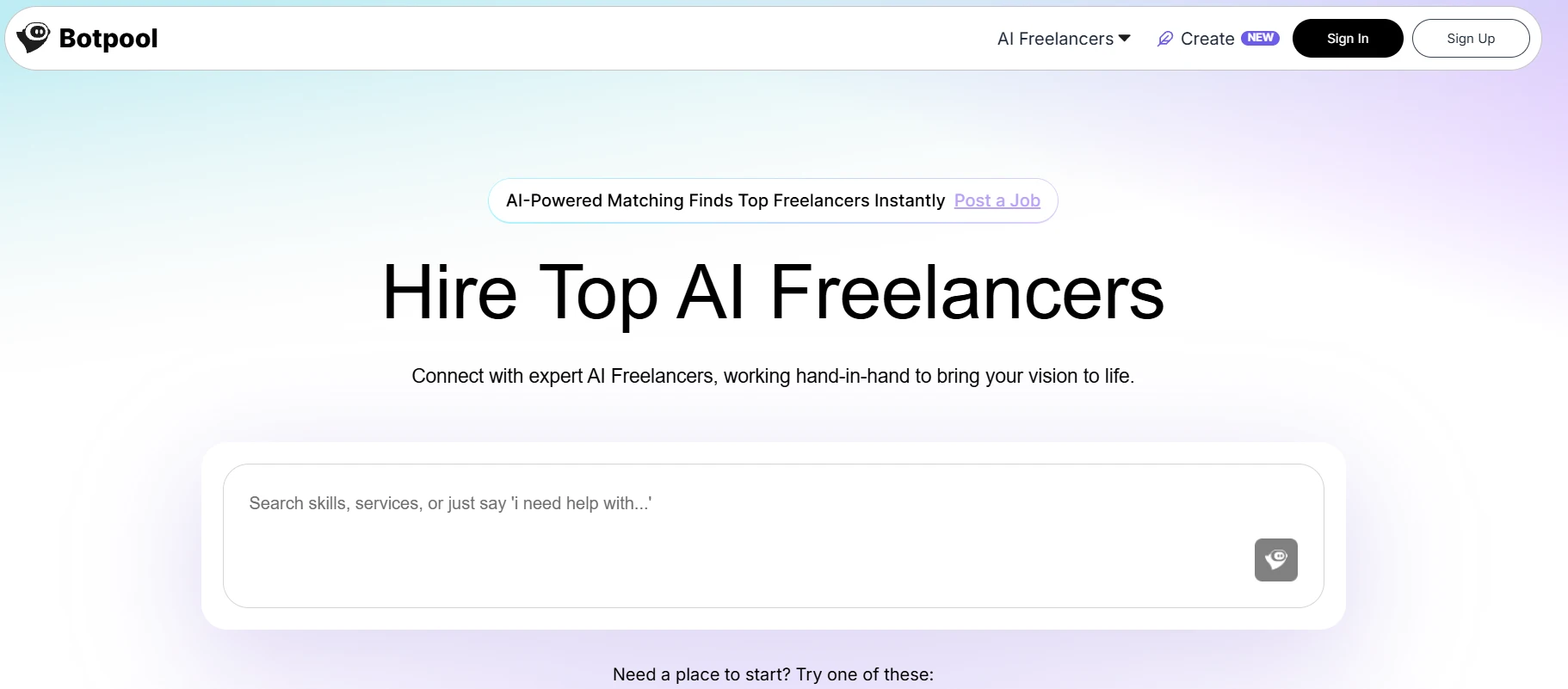
The newer option is a marketplace scoped to AI work only. Instead of filtering a general pool, you browse people who already do this for a living, organized by what they build: AI chatbot developers who design, train, and integrate conversational systems, automation specialists, machine learning engineers and so on. On Botpool, every freelancer is vetted for AI work before listing services, payment sits in escrow until you approve the delivery, and the platform takes a flat 10% commission with no separate client fee.
Two honest limits. The talent pool is smaller than Upwork's or Fiverr's, and the scope is AI only, so it will not help with general admin, translation or traditional web design. If you want the full field side by side, including the platforms above, our guide to the best AI freelance platforms in 2026 goes deeper on vetting and fees, and the Botpool and Fiverr comparison for AI projects covers the head-to-head.
Best for: projects where AI is the work, not a keyword in the title.
2. Upwork
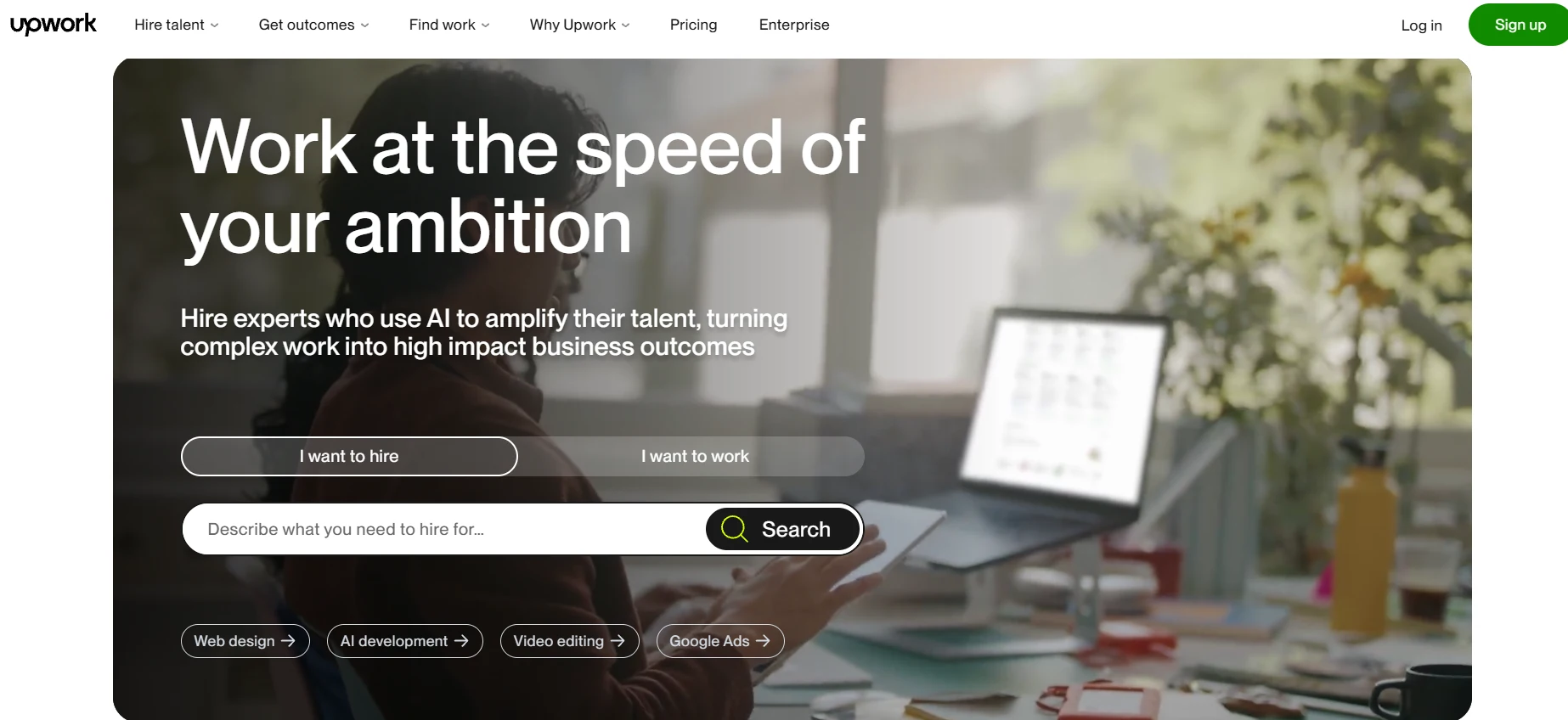
Upwork is the closest thing to a full replacement for Fiverr if you want scale and flexibility. Instead of buying a package, you post a job and review proposals, or search profiles and invite people directly. That extra step is the point. It lets you scope the work with the person before money moves.
The trade-off is proposal volume. A single AI automation post can pull dozens of proposals, and many come from generalists who added AI to their profile recently. If you go this route, plan for a real screening round. Our breakdown of Upwork alternatives for hiring AI talent covers the same comparison from the other direction, if Upwork is the platform you are already trying to leave.
Best for: custom or ongoing work where you want the widest possible talent pool.
3. Toptal
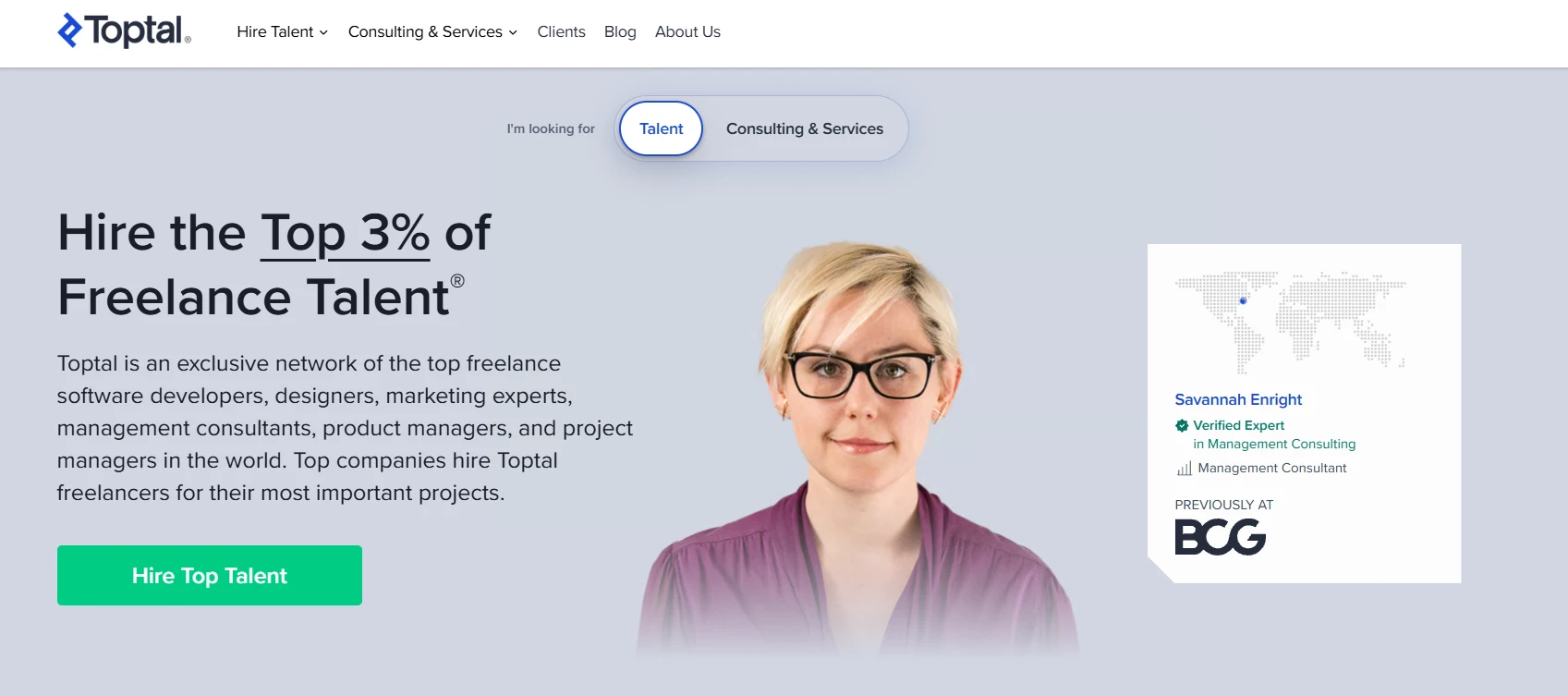
Toptal does the filtering for you. You describe what you need, its team proposes candidates, and engagements start with a trial period. It is built for senior work: machine learning engineering, complex integrations, anything where a bad hire costs more than a high rate.
Two things to know. Toptal does not publish rates, and they sit at the premium end. It also vets generalist-first, so AI depth varies within the pool. The differences in cost, speed and vetting depth are laid out in our comparison of Botpool and Toptal for vetted AI talent.
Best for: long engagements with senior engineers, when budget is not the binding constraint.
4. Contra
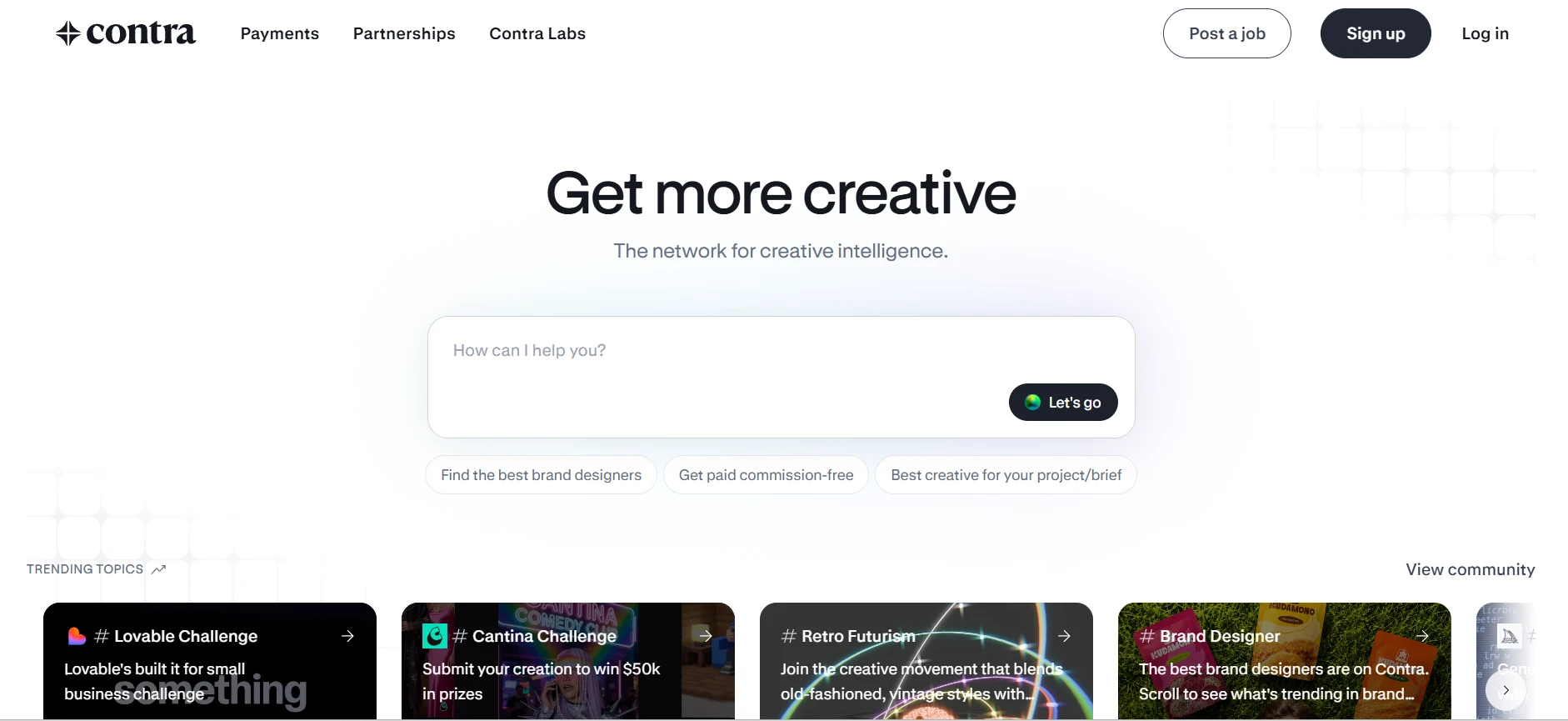
Contra takes no commission from freelancers. Clients pay a flat fee instead, with the first contractor free and $29 per contract after that. The talent skews creative: design, video, no-code builds, brand work. For AI-assisted design and content, it is a genuine option. For backend AI engineering, the pool thins out.
Best for: creative and no-code projects where you want to work with the same person repeatedly.
5. Freelancer.com
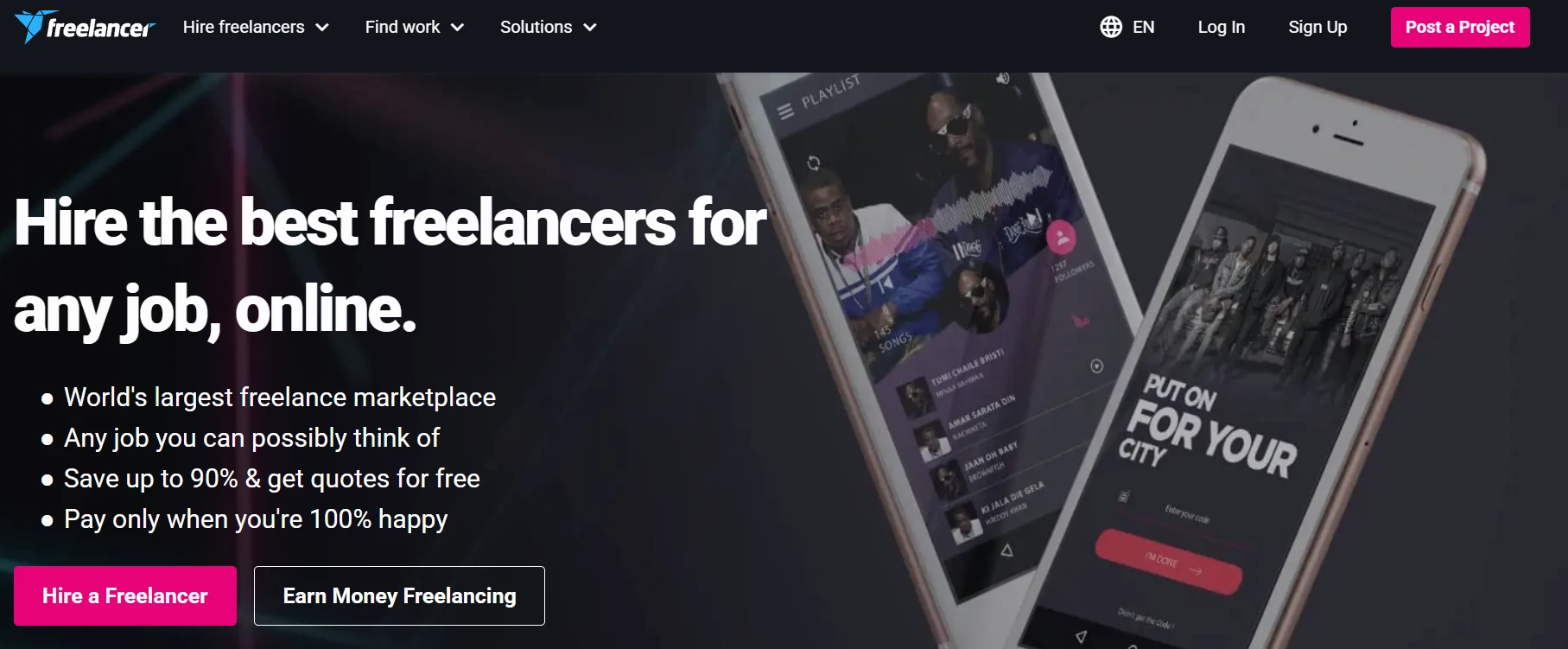
Freelancer.com runs on bidding, with the lowest client-side fee of the major marketplaces at 3% or $3 per project. The catch is the same as Upwork's, only louder. An AI project can attract a hundred bids in an hour, most of them racing each other to the bottom on price. If you have a precise brief and time to screen, it works. The trade-offs are covered in our Botpool and Freelancer.com comparison.
Best for: clearly scoped, budget-sensitive work.
6. Guru

Guru is smaller and quieter than the big three, with a low handling fee and flexible payment structures: fixed price, hourly, milestone or recurring. Its Work Room keeps files and messages in one place, which suits ongoing relationships. There is no AI-specific vetting, so it works best when you already know who you want to hire and just need a place to manage and pay them.
Best for: retainer-style relationships with someone you have already worked with.
Match the Platform to the Project
Most of the confusion in this decision comes from treating "AI work" as one thing. It is not. Different projects need different specialists and suit different platforms.
- A support chatbot or knowledge assistant. This is systems work, not a gig. You want someone who can show a live bot they built and explain how it handles questions it cannot answer.
- Workflow automation across your tools. If the workflow touches several APIs, authentication rules and approval steps, hiring specialists in AI business automation is usually faster than stitching together no-code templates yourself.
- Blog posts, product copy and landing pages. Fiverr and Contra both work here. So does hiring AI content writers who work with editorial oversight, which matters because raw model output still needs a human editor.
- Logos, illustration and visual assets. 99designs and Fiverr remain reasonable. If you want generated visuals refined by someone who knows the tools, AI art and design specialists cover image generation, editing and video.
- Getting found in AI answers. Ranking in ChatGPT, Perplexity and AI Overviews is its own discipline now, and generative engine optimization specialists approach it differently from traditional SEO.
- You want the outcome, not a freelancer to manage. Managed delivery is a different model from a marketplace. With Botpool One, AI builds are delivered end to end, which suits teams with no internal capacity to run a project.
If you are torn between hiring directly, using a marketplace or buying a managed build, the comparison of ways to hire AI experts lays the three routes side by side.
What to Check Before You Hire, on Any Platform
The platform decides who you can reach. These checks decide whether the project works.
- Ask for something live. A working demo tells you more than a portfolio image. For AI work, ask what happens when the system gets a question it was not built for.
- Get IP ownership in writing before work starts. This one catches people out. Under US copyright law, a contractor's work counts as "made for hire" only in narrow circumstances, and even then it requires an express written agreement signed before creation. Without a written assignment, the person who created the work may still own the copyright. Your contract should name the code, prompts, fine-tuned models and documentation.
- Ask where your data goes. Which model or API will they use, and will any of your customer data be sent to it during development? Anonymized test data avoids most of this.
- Budget the running costs. AI systems keep costing money after launch: model usage, hosting, maintenance. The breakdown of what it costs to hire an AI freelancer covers typical project budgets and the recurring costs that follow.
- Keep payment protected. Escrow or milestone payments protect both sides. Avoid moving payment off-platform, which also voids any dispute process.
- Start small. A paid first milestone shows you how someone works before you commit the full budget.
A structured version of this process, including test tasks and reference checks, is in our guide on vetting AI freelancers before you hire. If your brief is still rough, tightening it first saves the most money of anything on this list, and the steps for writing an AI project brief that gets useful quotes are worth 20 minutes before you post anywhere.
Common Mistakes When Switching Away From Fiverr
- Buying a gig for work that needs scoping. If a seller can quote your AI project without asking a single question, that is a warning sign, not efficiency.
- Comparing platforms on fees alone. A 3% fee on a rebuild costs more than a 10% fee on work delivered once.
- Assuming vetted means suitable. Vetting confirms someone can build. It does not confirm they have built what you need.
- Ignoring maintenance. Someone has to keep the thing running. Decide who before launch, not after.
- Spreading one project across three platforms. Splitting a chatbot, its integrations and its content across unconnected freelancers usually creates more coordination work than it saves.
Frequently Asked Questions
Is Fiverr still worth it in 2026?
Yes, for small, well-defined tasks with clear deliverables. It remains one of the fastest ways to buy design, writing, video, and simple AI tasks. It is a weaker fit for custom AI systems, work that touches your data, or anything needing long-term support.
What are the top freelancing platforms?
The most widely used are Fiverr, Upwork, Freelancer.com, Toptal, Guru, PeoplePerHour, Contra, 99designs and ComeUp, plus specialist marketplaces such as Botpool for AI work and Arc for developers. The right one depends on your project type and how much vetting you want the platform to do.
Which alternative is cheapest for clients?
Freelancer.com and Guru have the lowest published client fees, at roughly 3% and 2.9%. Fee level is not the same as total cost, since rates, rework and management time usually move the number more than the platform's cut does.
Which freelancing site is best for beginners?
For new freelancers, Fiverr and Freelancer.com are the easiest to start on because you can list services or bid immediately. Specialist platforms usually require proof of experience before you can list, which means fewer listings but less competition per project.
Is there a Fiverr for AI projects?
Effectively, yes. AI-focused marketplaces use a similar browse-and-buy model but restrict listings to AI services and vet sellers for AI experience first. The trade-off is a smaller pool limited to AI work.
Can I hire the same freelancer outside the platform?
Most platforms restrict this in their terms, often for a set period after you connect. Beyond the contract issue, moving off-platform removes escrow and dispute protection, which matters more on larger projects than most people expect.
Final Thoughts
Leaving Fiverr is not really a platform decision. It is a decision about the kind of work you are buying.
If the deliverable is a file, a gig marketplace is efficient, and there is no reason to overcomplicate it. If the deliverable is a system that has to understand your business, keep running, and be maintained, you need a place where you can scope the work, check real evidence of similar builds, and keep the person around afterwards.
Pick the platform that matches that, then spend your energy on the brief and the vetting. Those two things affect the outcome far more than which logo is in the corner of the invoice.
